SVG-Class
Overview
A car service app customers actually open: order status, payments, access keys. Ordering parts now takes 43 seconds instead of 65 minutes.
- Year
- 2026
- Type
- App · Automation
- Role
- Design and full-stack development
- Link
- svg-class.online
- 65 min → 43 s
- to order parts
- 9
- suppliers queried in parallel
- 112
- API routes
Challenge and solution
The challenge
The service centre runs on AutoDealer, a CRM with no customer-facing app. Clients had to call to ask about repair status, invoices and bookings, and pricing parts meant checking supplier sites one by one.
The solution
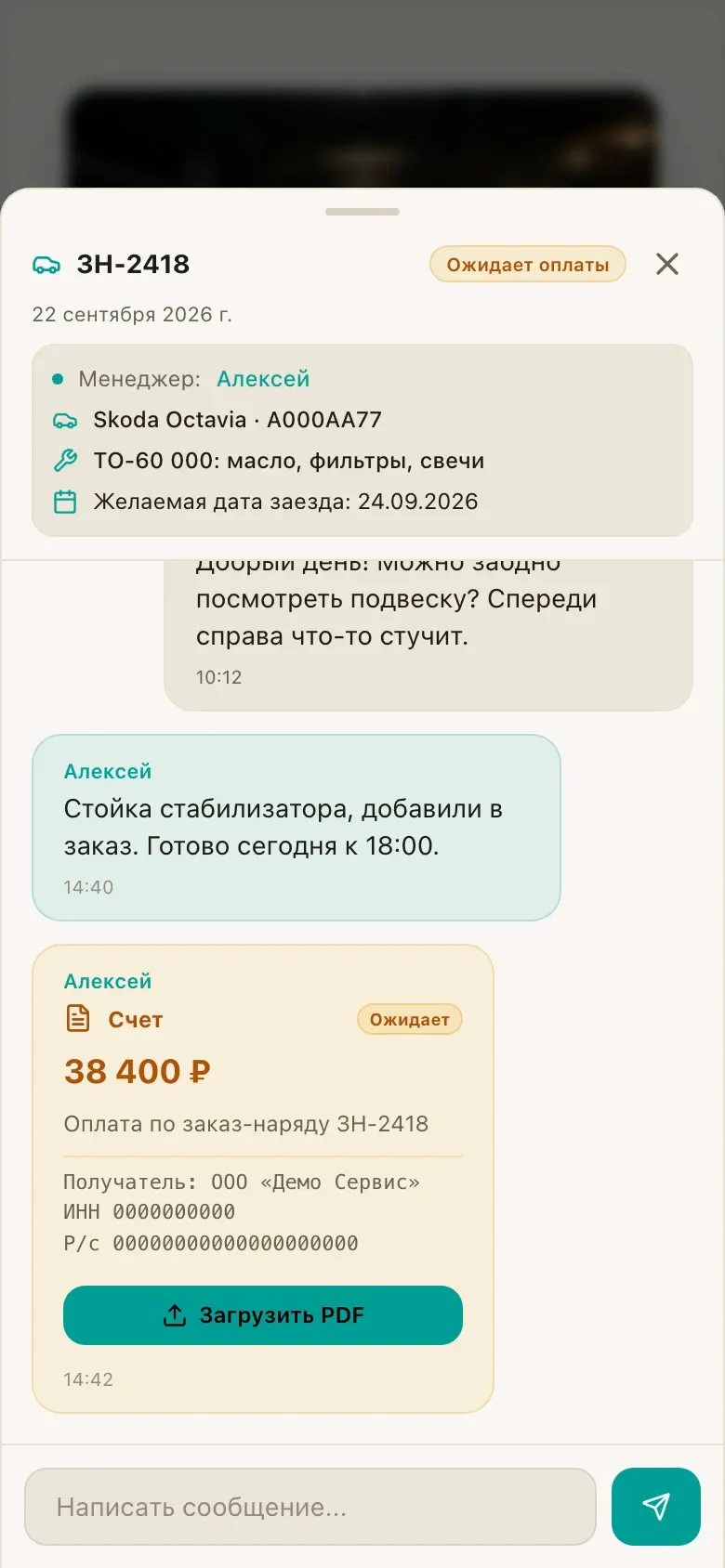
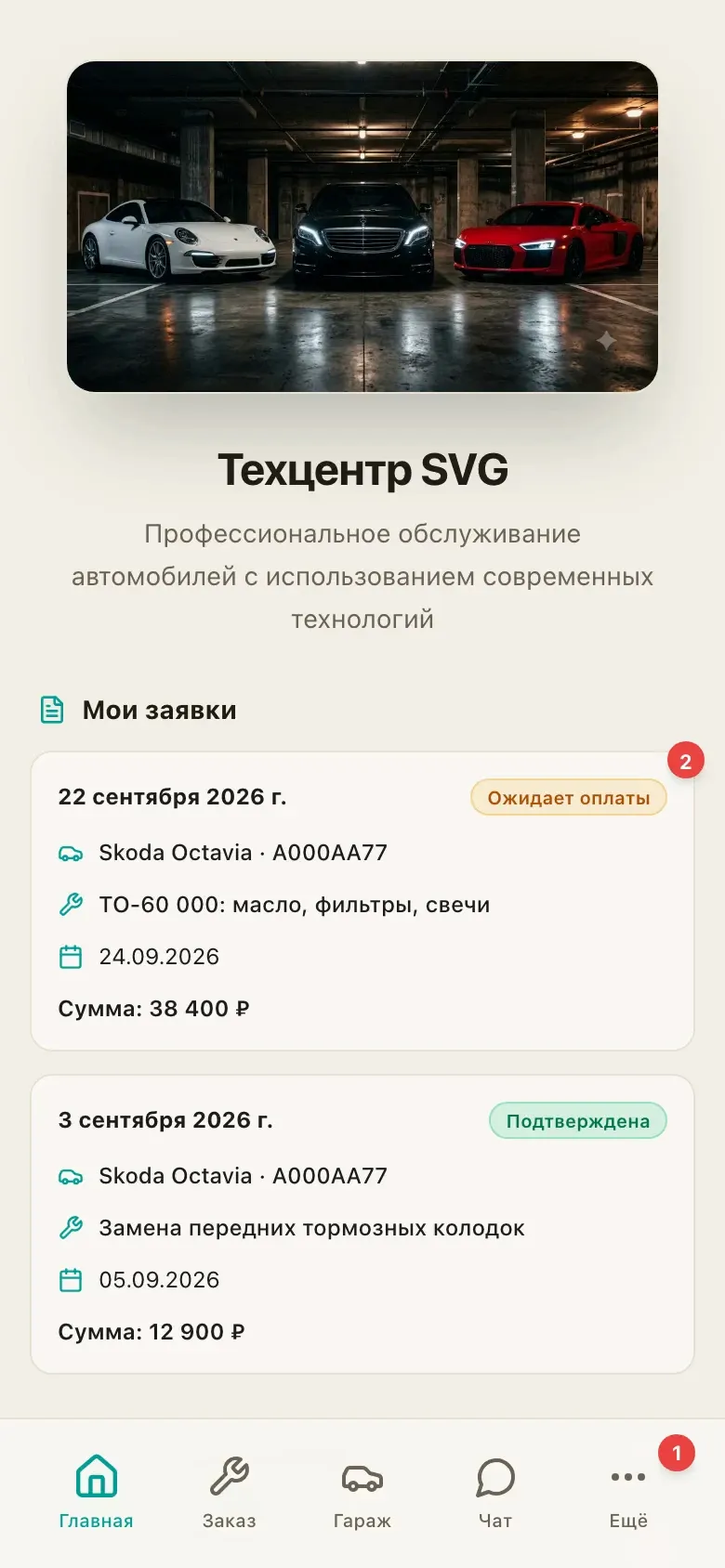
I built an installable app and an admin panel on top of the CRM: garage, live deal status, chat, invoices with cashback, passkey lock and push notifications. A separate parts tool lets an LLM decode the VIN, find OEM numbers and labour hours, query 9 suppliers in parallel and write the estimate back into AutoDealer.
Screens
What it does
- Garage with the customer’s cars and repair history from the CRM
- Live request status and a chat per deal, with PDF estimates and invoices
- Invoices with “I paid” receipts and 2% cashback on confirmed payment
- Bonus programme: balance, history and works paid with points
- App lock with a passkey or a 4-digit PIN
- Push notifications for bookings, confirmations and maintenance
- Admin panel with 15 sections for the staff
Under the hood
- Fastify proxies the AutoDealer CRM with session reuse, Redis caching and a retry queue in Postgres.
- Booking watchers claim each event with one atomic insert, so no customer gets a push twice.
- Migrated 17 MongoDB collections to PostgreSQL with deterministic UUIDs.
- Daily maintenance reminders — 7 months or +10,000 km — falling back from push to Telegram.
- Next.js
- React
- PWA
- Tailwind CSS
- Fastify
- PostgreSQL
- Prisma
- Redis
- Docker
- Telegram
- Claude